Introduction
The UAE is moving toward a more connected and digital tax environment through the introduction of electronic invoicing, or e-invoicing. Businesses will need to prepare their accounting systems, invoicing processes, and internal controls to meet the new requirements.
The transition is being introduced in phases, making early preparation an important step for businesses that want to avoid operational disruptions and maintain accurate financial records.
This guide explains the UAE e-invoicing timeline, what businesses should do in 2026, and how professional accounting support can help make the transition smoother.
What Is UAE E-Invoicing?
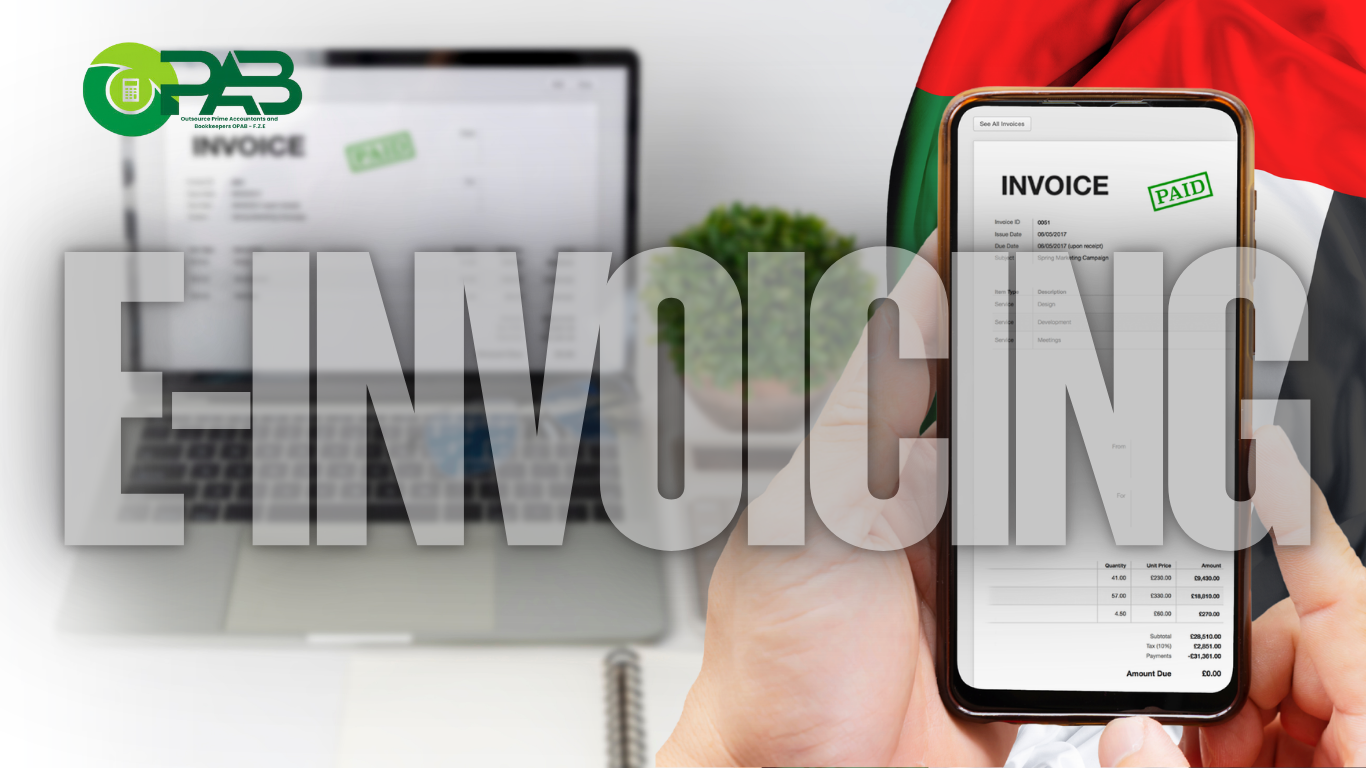
UAE e-invoicing is a system for issuing, exchanging, and reporting invoice data electronically through a structured digital format. Unlike a traditional PDF invoice, an e-invoice contains structured data that can be processed by accounting systems and transmitted through accredited service providers.
The system is designed to improve transaction accuracy, transparency, efficiency, and tax compliance. It follows the international Peppol framework, which supports the exchange of electronic business documents between connected systems.
Is a PDF invoice considered an e-invoice?
No. A PDF, scanned document, image, Word file, or invoice sent by email is not, by itself, a structured e-invoice under the UAE system. Businesses should distinguish between electronically sending an invoice and issuing an invoice that meets the official e-invoicing requirements.
UAE E-Invoicing Implementation Timeline
The Ministry of Finance has established a phased implementation schedule based on annual revenue. The pilot phase began on July 1, 2026, and businesses can also voluntarily adopt e-invoicing from that date.
Important deadlines for businesses
Business category | Appoint an ASP by | Implement e-invoicing by |
|---|---|---|
Annual revenue of AED 50 million or more | October 30, 2026 | January 1, 2027 |
Annual revenue below AED 50 million | March 31, 2027 | July 1, 2027 |
The deadline for larger businesses to appoint an Accredited Service Provider (ASP) was extended from July 31 to October 30, 2026. The mandatory implementation date of January 1, 2027, remains unchanged.
Important: Revenue thresholds and implementation dates should be assessed against the latest official Ministry of Finance guidance. Businesses should not assume that being below the AED 50 million threshold means they are exempt from e-invoicing.
1. Review Your Business’s E-Invoicing Readiness
One of the first steps businesses should take in 2026 is to assess how invoices are currently created, approved, recorded, and stored.
Ask the following questions:
Are invoices prepared manually or through accounting software?
Does your accounting system support structured invoice data?
Are customer and supplier records complete and accurate?
Can your business issue credit notes and process invoice adjustments efficiently?
Are your accounting and invoicing systems connected?
Who will be responsible for e-invoicing compliance?
A readiness assessment helps identify gaps before implementation becomes mandatory.
2. Choose an Accredited Service Provider
An Accredited Service Provider connects your business to the UAE e-invoicing system and supports the electronic exchange of invoice data.
Businesses should begin evaluating service providers based on their technical capabilities, integration options, security measures, pricing, and support services.
What to consider when selecting an ASP
Compatibility with your accounting or ERP software.
Ability to issue and receive structured e-invoices.
Support for credit notes and required invoice data fields.
Integration with existing business workflows.
Data security and system reliability.
Onboarding, testing, and ongoing technical support.
The Ministry of Finance and Federal Tax Authority provide official e-invoicing information and guidance for businesses selecting and onboarding service providers.
3. Check Your Accounting Software
Your accounting software plays an important role in successful e-invoicing implementation. Businesses using platforms such as Xero, QuickBooks, or Zoho Books should review whether their current setup can integrate with an accredited service provider.
Software readiness may require:
Updating your accounting software.
Configuring tax codes and invoice fields.
Connecting the system to an accredited service provider.
Testing invoice transmission and receipt.
Ensuring credit notes and corrections are properly recorded.
Do not assume that an accounting software subscription automatically makes your business compliant. Confirm the specific integration and technical requirements with your software provider and ASP.
4. Organize Your Customer and Supplier Data
Accurate business data is essential for reliable electronic invoicing. Incorrect customer details, incomplete tax information, or inconsistent invoice records can create delays and errors.
Businesses should review:
Customer and supplier names and registration details.
Tax registration information, where applicable.
Invoice numbering and transaction references.
Product and service descriptions.
VAT treatment and tax codes.
Payment terms and bank details.
Clean data makes the transition easier and reduces the risk of rejected or inaccurate invoices.
5. Review Your VAT and Tax Records
E-invoicing is closely connected to the accuracy of your accounting and tax records. Businesses should ensure that sales, purchases, VAT, credit notes, and adjustments are properly recorded.
Before implementation, review whether your accounting processes correctly capture:
Taxable and exempt transactions.
Standard-rated and zero-rated supplies.
Input VAT and output VAT.
Credit notes and refunds.
Business-to-business and business-to-government transactions.
E-invoicing does not replace existing tax obligations. Businesses must continue to maintain accurate records and comply with applicable UAE VAT and Corporate Tax requirements.
6. Prepare Your Internal Invoicing Procedures
Technology alone is not enough. Your employees should understand how the new system will affect daily invoicing activities.
Create clear procedures for:
Preparing and approving invoices.
Issuing and transmitting e-invoices.
Receiving and processing supplier invoices.
Handling rejected invoices and errors.
Issuing credit notes and corrections.
Reconciling invoices with accounting records.
Retaining supporting documentation.
Assign responsibility to specific employees or departments so that issues can be identified and resolved promptly.
7. Start Testing Before Your Deadline
Businesses should avoid waiting until the mandatory implementation date to test their systems.
A practical testing process may include:
Creating sample invoices.
Checking mandatory data fields.
Testing VAT calculations.
Sending test transactions through the service provider.
Confirming successful receipt by customers or suppliers.
Reviewing error messages and correction procedures.
Reconciling e-invoices with the accounting ledger.
Testing gives businesses time to address technical issues before they affect actual transactions.
8. Understand Which Transactions Are Covered
The UAE e-invoicing framework generally covers business-to-business (B2B) and business-to-government (B2G) transactions, subject to specified exclusions. Business-to-consumer transactions are not subject to the system until a future decision determines otherwise, and businesses exclusively engaged in such transactions are currently excluded under the stated framework.
Businesses should review their transaction types carefully, particularly if they serve corporate customers, government entities, or a combination of business and individual customers.
9. Prepare for Electronic Credit Notes
E-invoicing is not limited to issuing sales invoices. Businesses must also prepare for electronic credit notes when transactions are cancelled, consideration is reduced, refunds are made, or invoice errors require correction.
Your accounting procedures should clearly explain when a credit note is required and how it is linked to the original invoice.
10. Maintain Strong Financial Controls
The move to e-invoicing is an opportunity to improve financial management.
Businesses should review their controls over:
Invoice approval.
Revenue recognition.
Customer balances.
Supplier payments.
VAT reconciliation.
Duplicate invoices.
Credit notes and refunds.
Access to financial systems.
Better controls can help reduce errors, improve visibility over cash flow, and support more reliable financial reporting.
Benefits of Preparing Early for UAE E-Invoicing
Early preparation can provide several business advantages.
Improved invoice accuracy
Structured data and better processes can help reduce manual errors and inconsistencies.
More efficient invoicing
Digital workflows can reduce repetitive manual work and support faster processing.
Better compliance readiness
Businesses have more time to identify gaps, test systems, and establish internal controls.
Better financial visibility
More consistent invoice data can support reconciliations, reporting, and business decisions.
The Ministry of Finance identifies efficiency, transparency, and stronger compliance as key objectives of the UAE e-invoicing programme.
UAE E-Invoicing Preparation Checklist for 2026
Use this checklist to start organizing your business for the transition.
Readiness checklist
How OPAB Can Help Your Business Prepare
Preparing for UAE e-invoicing requires more than selecting software. Businesses need organized accounting records, accurate tax information, reliable financial processes, and a clear implementation plan.
OPAB Services can support businesses with accounting and bookkeeping, VAT compliance, financial reporting, and accounting process improvements. Our team can help you review your current financial workflows, identify preparation needs, and coordinate accounting requirements as your business moves toward e-invoicing.
Whether you operate an SME, growing company, or established business in the UAE, preparing early can help you transition with greater confidence.
Conclusion
UAE e-invoicing is an important step in the country’s digital financial transformation. Businesses should begin preparing now by reviewing their accounting systems, organizing financial data, selecting an accredited service provider, and improving internal invoicing procedures.
The earlier your business starts, the more time you have to identify technical issues, train employees, and establish reliable processes before mandatory implementation.
Clean Books. Better Systems. Stronger Compliance.
Need help preparing your business for UAE e-invoicing? Contact OPAB Services for professional accounting and bookkeeping support.