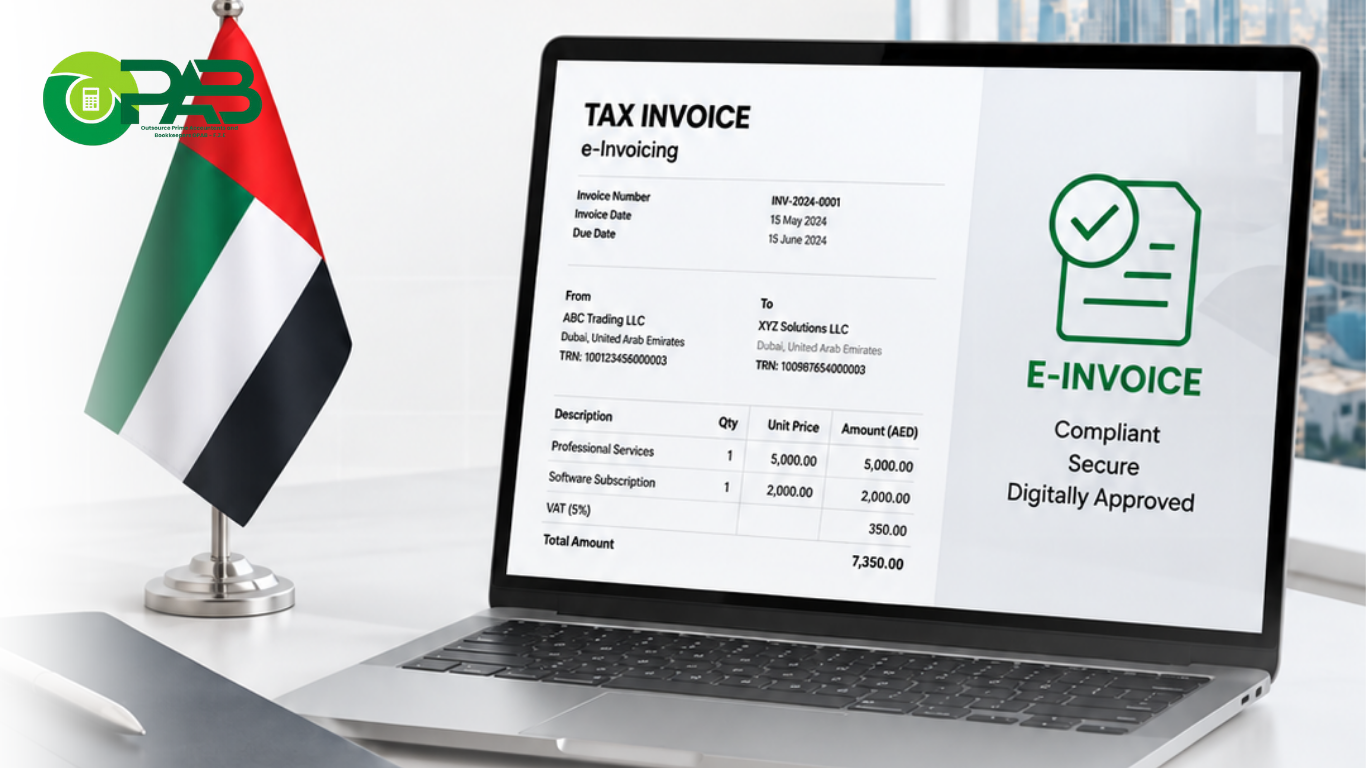
UAE E-Invoicing Is More Than a Compliance Requirement
The introduction of UAE E-Invoicing represents a significant shift in how businesses manage their financial transactions.
Many business owners may initially view electronic invoicing as another tax compliance obligation introduced by the UAE government.
However, its impact goes far beyond taxation.
UAE E-Invoicing is fundamentally an operational change that affects how businesses create, approve, issue, receive, process, and reconcile invoices.
It will require greater coordination between finance, accounting, sales, procurement, operations, and IT departments.
Businesses that treat e-invoicing purely as a software upgrade or tax compliance exercise may overlook important operational challenges.
1. Changes to the Sales and Billing Process
Under traditional invoicing practices, businesses may prepare invoices manually, generate PDFs, and send them to customers through email.
With UAE E-Invoicing, in-scope invoices must be generated and exchanged using prescribed structured electronic formats and the applicable service provider framework.
This introduces new operational requirements, including:
Accurate customer information before invoicing
Standardized invoice data
Integration between billing and accounting systems
Electronic invoice transmission
Procedures for handling rejected or unsuccessful transactions
Operational impact: Sales and billing teams must ensure that customer and transaction information is complete and accurate before invoices are issued.
2. Changes to Accounts Receivable Operations
Accounts receivable teams will need to adapt their daily processes to electronic invoice exchange.
The new environment may require additional controls to monitor invoice transmission status, investigate failed exchanges, and reconcile electronic invoices with accounting records.
Businesses should establish clear procedures for managing invoice corrections, credit notes, and customer disputes.
Operational impact: Accounts receivable management will increasingly depend on accurate transaction data, system monitoring, and effective exception handling.
3. Changes to Procurement and Accounts Payable
E-invoicing will also affect how businesses receive and process supplier invoices.
Accounts payable teams may need to adjust procedures for:
Receiving structured electronic invoices
Matching invoices with purchase orders and delivery records
Validating supplier and invoice information
Managing discrepancies and rejected invoices
Recording approved invoices in accounting systems
Operational impact: Procurement, receiving, and finance teams will need to coordinate more closely to prevent delays in supplier invoice processing.
4. Changes to Accounting and ERP Systems
Businesses should assess whether their existing accounting or Enterprise Resource Planning (ERP) systems can support the UAE’s electronic invoicing requirements.
Depending on system capabilities, implementation may involve software upgrades, data mapping, system integration, and connectivity with an Accredited Service Provider.
Businesses must also consider the ongoing costs of maintaining compliant systems.
Operational impact: Accounting software will become an important component of the electronic invoice exchange process, making system reliability and data quality critical.
5. Changes to Internal Controls and Responsibilities
Electronic invoicing introduces additional operational risks that businesses must manage.
These may include inaccurate invoice data, transmission failures, integration errors, unauthorized changes, and incomplete transaction records.
Management should establish clear responsibilities for monitoring and resolving these issues.
Finance teams should also review approval controls, user access, audit trails, and reconciliation procedures.
Operational impact: Businesses will need stronger coordination between departments and clearer accountability for invoice processing.
6. Changes to Cash Flow and Working Capital Management
The transition to e-invoicing may influence billing efficiency and cash flow management.
Accurate and timely invoice processing can help reduce administrative delays, while unresolved transmission errors or incomplete customer information could delay invoicing and collections.
For business owners and CFOs, this makes operational readiness particularly important.
Operational impact: Businesses should monitor invoice processing times, rejected transactions, overdue receivables, and payment collection performance during implementation.
7. How Should UAE Businesses Prepare?
A successful transition requires more than purchasing compliant software.
Businesses should develop a coordinated implementation plan that includes:
Process assessment: Review existing sales, purchasing, invoicing, and accounting workflows.
System readiness: Evaluate accounting software and ERP integration capabilities.
Data quality: Validate customer, supplier, and transaction information.
Service provider selection: Assess appropriate Accredited Service Provider options.
Internal controls: Establish procedures for failed invoices, corrections, reconciliation, and audit trails.
Employee training: Prepare finance, sales, procurement, and IT teams.
Testing: Conduct end-to-end testing before mandatory implementation.
8. The CFO’s Role in UAE E-Invoicing Implementation
The CFO or finance manager should play a central role in coordinating the transition.
Although IT teams will support the technical implementation, finance leaders must ensure that the new invoicing framework aligns with accounting policies, operational requirements, tax obligations, and financial controls.
Key management considerations include:
What operational processes need to change?
Will our existing accounting software support e-invoicing?
Who will be responsible for failed or rejected invoices?
How will electronic invoices be reconciled with accounting records?
What implementation costs should be included in the budget?
How will we ensure business continuity during the transition?
Addressing these questions early can help businesses avoid costly operational disruptions.
Conclusion: Prepare Your Operations, Not Just Your Software
UAE E-Invoicing should be viewed as a business-wide operational transformation rather than simply a tax compliance project.
It will affect daily invoicing activities, accounting workflows, financial controls, and coordination between departments.
For business owners, the priority is not only to meet the mandatory implementation deadline but also to ensure that business operations can continue efficiently under the new electronic invoicing framework.
Companies that prepare early will be better positioned to manage implementation costs, minimize disruptions, and improve the efficiency of their finance functions.
The key question is no longer just, “Is our accounting software ready for UAE E-Invoicing?”
It is, “Is our entire business operation ready for UAE E-Invoicing?”
Is your business operationally ready for UAE E-Invoicing?
Start with an E-Invoicing Operational Readiness Assessment covering your invoicing workflows, accounting systems, internal controls, employee responsibilities, and implementation budget.
Disclaimer: This article provides general business and regulatory awareness. Companies should consult current UAE Ministry of Finance and Federal Tax Authority guidance to confirm their specific compliance requirements and implementation timelines.