Introduction
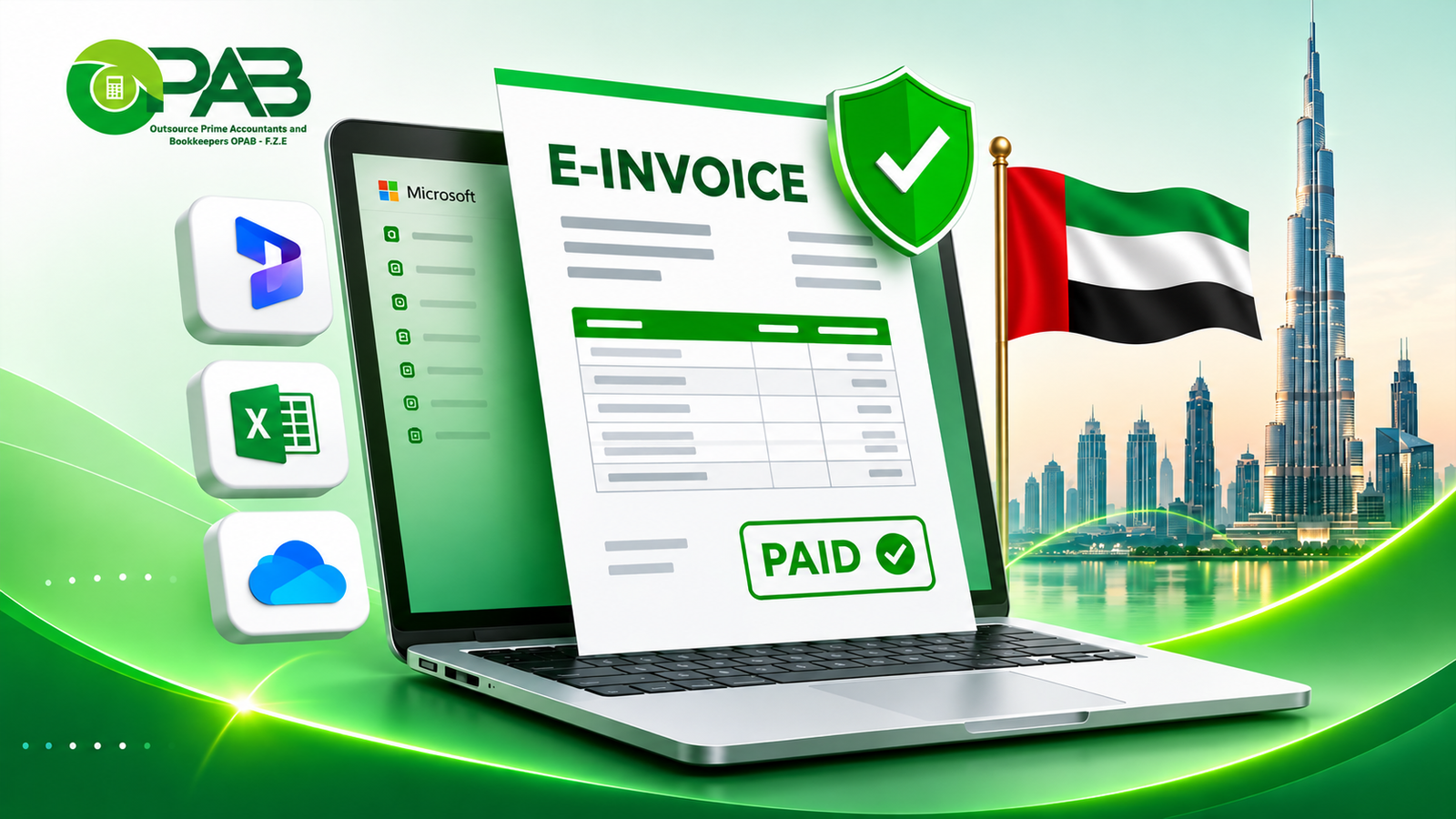
The United Arab Emirates is entering a new era of digital taxation with the introduction of mandatory UAE E-Invoicing in 2027. This initiative represents a major transformation in how businesses issue, exchange, process, and report invoices.
For companies operating in Dubai, Abu Dhabi, Sharjah, and across the UAE, understanding the new electronic invoicing requirements is essential for maintaining tax compliance and ensuring smooth business operations.
With the first mandatory implementation deadline approaching on 1 January 2027, businesses should evaluate their accounting systems, review their invoicing procedures, and prepare for the transition.
What Is UAE E-Invoicing?
UAE E-Invoicing is a government-led digital invoicing system designed to standardise the electronic exchange of invoices between businesses and relevant government entities.
Unlike traditional paper invoices or PDF documents sent through email, an electronic invoice contains structured data that can be automatically exchanged and processed by compatible accounting systems.
The UAE Ministry of Finance (MoF), working with the Federal Tax Authority (FTA), is implementing a framework based on internationally recognised Peppol standards.
The system aims to:
Improve tax compliance and transparency.
Reduce manual invoicing errors.
Streamline business transactions.
Support automated financial reporting.
Enhance the efficiency of the UAE’s digital economy.
Important: Simply creating an invoice in Excel or sending a PDF by email does not automatically satisfy the new UAE e-invoicing requirements.
UAE E-Invoicing 2027: Mandatory Implementation Deadlines
The UAE government has established a phased implementation schedule to allow businesses sufficient time to prepare.
Official UAE E-Invoicing Timeline
| Business category | ASP appointment deadline | Mandatory implementation |
|---|---|---|
| Annual revenue of AED 50 million or more | October 2026 | 1 January 2027 |
| Annual revenue below AED 50 million | 31 March 2027 | 1 July 2027 |
| Government entities | 31 March 2027 | 1 October 2027 |
The first phase focuses on larger businesses, followed by smaller businesses and government entities.
Businesses should assess their revenue and transaction types to determine which phase applies.
The pilot and voluntary implementation phases began on 1 July 2026, allowing eligible participants to test the electronic invoicing framework before mandatory implementation.
Who Must Comply With UAE E-Invoicing?
The UAE electronic invoicing framework generally covers in-scope business-to-business (B2B) and business-to-government (B2G) transactions.
Businesses potentially affected include:
Trading and distribution companies
Manufacturing businesses
Professional service providers
Construction and contracting companies
Consulting firms
Technology and IT service providers
Wholesale businesses
Other companies conducting in-scope business transactions in the UAE
Business-to-consumer (B2C) transactions are currently excluded from mandatory implementation until a future ministerial decision provides otherwise.
Certain other transactions are also excluded under the regulations. For example, qualifying transactions between members of the same tax group benefit from a temporary 24-month exclusion beginning 1 January 2027.
Businesses should review their specific circumstances rather than assume every transaction is covered.
How Does the UAE E-Invoicing System Work?
The UAE is adopting a Peppol-based 5-Corner Model for electronic invoicing.
Under this framework, invoices are exchanged through Accredited Service Providers (ASPs), which support the transmission and validation of electronic invoice information.
The process generally involves five components:
1. Supplier: The business generates an electronic invoice using its accounting or ERP system.
2. Supplier’s Accredited Service Provider: The invoice data is processed and transmitted through the approved electronic invoicing network.
3. Buyer’s Accredited Service Provider: The receiving provider processes the electronic invoice for delivery.
4. Buyer: The customer receives the structured electronic invoice for processing and recording.
5. Tax data reporting: The required electronic invoice information is reported through the framework established for the Federal Tax Authority.
This system is designed to reduce manual intervention and improve the consistency of financial information exchanged between businesses.
Why Is UAE E-Invoicing Important for Businesses?
Mandatory electronic invoicing is more than a regulatory change. It creates opportunities to modernise accounting operations and strengthen financial controls.
1. Improved VAT Compliance
Structured electronic invoices can help businesses maintain more consistent transaction records and support accurate VAT reporting.
However, implementing e-invoicing does not replace existing VAT obligations, including VAT return filing and recordkeeping requirements.
2. Reduced Manual Errors
Automated invoice processing can minimise mistakes caused by manual data entry, duplicate records, and inconsistent invoice information.
3. Faster Accounts Payable and Receivable Processing
Electronic invoicing can streamline invoice receipt, verification, approval, and reconciliation.
4. Better Financial Visibility
Integrated invoicing systems can provide finance teams with more timely transaction information, supporting cash flow management and financial reporting.
5. Stronger Internal Controls
Standardised electronic invoicing procedures can improve documentation, transaction tracking, and audit readiness.
How to Prepare for UAE E-Invoicing 2027
Businesses should begin their compliance preparations by assessing their current systems, processes, and responsibilities.
Step 1: Identify Your Implementation Deadline
Determine whether your business falls under the first or second implementation phase based on the applicable revenue threshold and regulatory requirements.
Step 2: Review Your Existing Accounting Software
Assess whether your current accounting or ERP system can generate the structured invoice data required under the UAE framework.
Step 3: Select an Accredited Service Provider
Review the official Ministry of Finance list of Accredited Service Providers and evaluate the technical, commercial, and operational suitability of each option.
Step 4: Validate Your Invoice Data
Review customer information, supplier details, tax registration numbers, VAT treatment, and other mandatory invoice fields.
Step 5: Strengthen Internal Controls
Establish clear procedures for invoice issuance, validation, corrections, reconciliation, and electronic record retention.
Step 6: Train Your Finance and Accounting Team
Ensure your finance, accounting, tax, and IT personnel understand the new requirements and their responsibilities.
Step 7: Conduct System Testing
Test invoice creation, transmission, receipt, reporting, and exception handling before your mandatory implementation date.
What Happens if a Business Fails to Comply?
Businesses that fail to meet applicable UAE e-invoicing requirements may face administrative penalties under the relevant legislation.
In October 2026, the Ministry of Finance announced an updated administrative penalties framework through Cabinet Decision No. 173 of 2026.
Non-compliance may also lead to operational difficulties, including invoice processing delays, system integration problems, and additional administrative work.
Businesses should review the current penalty provisions and ensure that their compliance plans address both technical and regulatory obligations.
Frequently Asked Questions About UAE E-Invoicing 2027
Is e-invoicing mandatory in the UAE in 2027?
Yes. Mandatory implementation begins on 1 January 2027 for in-scope businesses with annual revenue of AED 50 million or more. Other covered businesses generally follow from 1 July 2027.
Is a PDF invoice considered an electronic invoice?
No. A PDF invoice alone does not meet the structured electronic data requirements of the UAE e-invoicing framework.
Do small businesses need to comply with UAE e-invoicing?
Yes, businesses with annual revenue below AED 50 million may be required to implement the system from 1 July 2027 if their transactions fall within scope.
Does UAE e-invoicing replace VAT returns?
No. Businesses must continue complying with applicable UAE VAT registration, filing, payment, and recordkeeping requirements.
Do businesses need an Accredited Service Provider?
Businesses subject to mandatory implementation must appoint an Accredited Service Provider in accordance with the applicable regulations.
Can businesses implement e-invoicing before 2027?
Yes. Voluntary implementation became available from 1 July 2026, subject to the relevant technical and regulatory requirements.
Final Thoughts: Prepare Your Business for UAE E-Invoicing 2027
The introduction of UAE E-Invoicing 2027 marks a significant milestone in the country’s digital tax transformation.
For business owners, CFOs, finance managers, and accounting professionals, the transition presents both compliance responsibilities and opportunities to improve financial processes.
Businesses that prepare early can reduce implementation risks, strengthen accounting controls, and build more efficient financial operations.
The key message is simple: UAE E-Invoicing 2027 is approaching, and preparation should begin now.
Need Help Preparing for UAE E-Invoicing?
Contact OPAB today to book your FREE consultation!
Our accounting and tax advisory team can help you understand the requirements, assess your current invoicing processes, identify compliance gaps, and develop a practical implementation plan.
Contact us today to discuss your UAE E-Invoicing 2027 readiness assessment.
Disclaimer: This article provides general information based on UAE e-invoicing regulations and guidance available as of November 2026. Requirements may change, and businesses should consult official Ministry of Finance and Federal Tax Authority publications for updates.