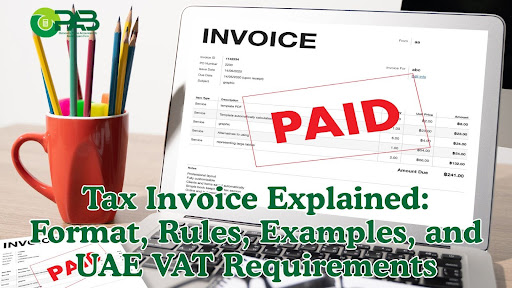
A tax invoice is one of the most important documents used in business because it shows the details of a taxable sale and confirms how much tax was charged. Many people look up this topic because they want a simple explanation of what a tax invoice does and how it supports VAT or GST requirements. This article breaks everything down in a clear and friendly way so you can use tax invoices correctly and avoid common mistakes. You will learn what a tax invoice includes, how to create one, and why it matters for compliance in the UAE and other VAT or GST systems.
Read on to understand everything you need to know about tax invoices simply and practically.
What Is a Tax Invoice and Why It Matter
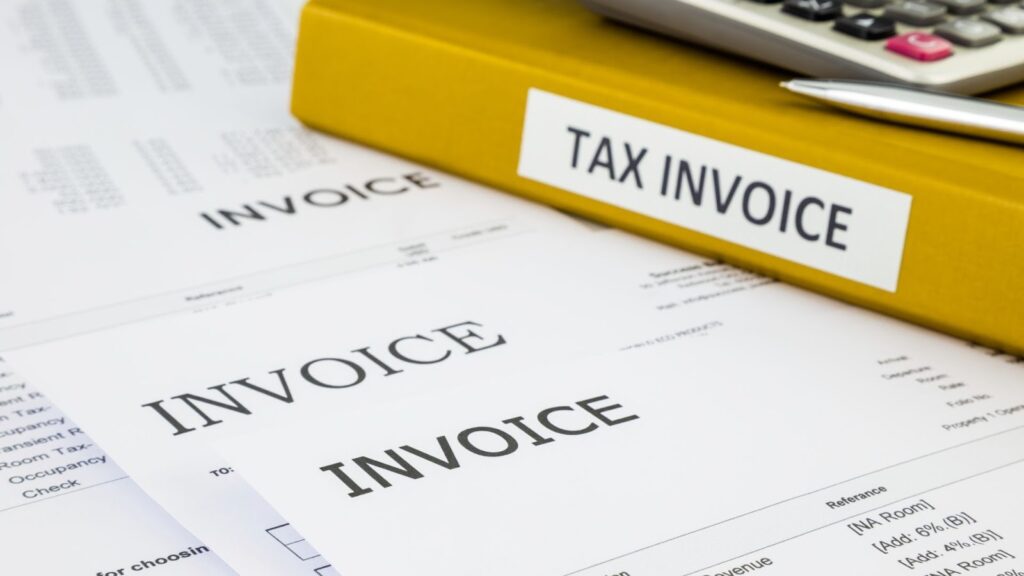
A tax invoice is an official written or electronic document that records a taxable supply, shows how much tax was charged, and identifies both the seller and buyer. Under UAE VAT rules, this document is required for most taxable transactions and supports proper VAT reporting.
Tax invoices help customers claim input tax while helping sellers prove they charged the correct amount of VAT. They support accounting accuracy and are essential during audits.
What Makes a Tax Invoice Different from a Regular Invoice
A tax invoice includes tax information that a regular invoice does not. This includes the tax registration number, the tax rate, and the exact amount of tax charged on the sale.
A regular invoice shows prices and totals but does not break down VAT or GST. A tax invoice also differs from a receipt because a receipt confirms payment, while a tax invoice confirms that a taxable sale occurred and must meet VAT format requirements.
Tax Invoice vs VAT Invoice and GST Invoice
A tax invoice and a VAT invoice are usually the same document in countries that charge VAT, including the UAE. Both must show the tax amount, tax rate, and the seller’s tax registration number.
In GST countries, a GST tax invoice must include GSTIN, GST rate, and tax type. These details help the buyer claim tax credits and help the seller meet the rules for GST reporting.
How a Tax Invoice Affects VAT and GST Compliance
A tax invoice is essential for VAT or GST compliance. Buyers use it to claim input tax credits, and sellers use it to report the tax they collected.
If a tax invoice is missing or incorrect, tax authorities may reject claims or issue penalties. Using approved accounting software helps keep calculations accurate.
📚 Also read: Top FTA-Approved Accounting Software in UAE for Businesses
Required Information on a Tax Invoice
A tax invoice must include the required fields set by the tax authority. These include:
• Seller name and address
• Buyer name and address
• Seller and buyer tax registration numbers if the buyer is registered
• Invoice date and unique invoice number
• Description of goods or services
• Quantities, unit prices, and totals
• Tax rate and tax amount
• Whether prices are VAT inclusive or exclusive
Under UAE VAT law, a full tax invoice must also:
• Clearly display the words Tax Invoice
• Show any discount applied
• Express all amounts and tax in UAE dirhams
• Include the date of supply if different from the invoice date
• Use a sequential invoice number that cannot be repeated
• Include a reverse charge note when the buyer must account for VAT
Some countries require QR codes or digital validation under e-invoicing rules.
📚 Also read: E-invoicing to be Implemented Next Year, 2026
How to Create a Tax Invoice Step by Step
Creating a tax invoice becomes simple once you follow the required steps.
Step 1: Choose Your Format
• Accounting software
• Invoice template
• Manual creation
Step 2: Fill in Seller and Buyer Details
Add names, addresses, and tax registration numbers.
Step 3: List Items or Services
• Clear descriptions
• Unit prices and quantities
• Total amounts
Step 4: Add Tax Calculations
• Tax rate
• Tax amount
• Total amount in AED for UAE VAT
Step 5: Add Notes and Payment Terms
Include due dates, instructions, or references.
How to Get a Tax Invoice as a Customer
Customers may request a tax invoice when VAT or GST applies.
Under UAE VAT law, a registered business must issue a tax invoice within 14 days from the date of supply for taxable transactions.
Who Can Issue a Tax Invoice
Only VAT or GST-registered businesses can issue tax invoices. If your business is not registered, you cannot charge VAT or GST and must issue a simple invoice instead.
Types of Tax Invoices
Different transactions require different types of tax invoices:
✅ Standard tax invoice
✅ Simplified tax invoice
✅ Reverse charge invoice
✅ Export tax invoice
Under UAE VAT rules:
✅ A simplified invoice may be used if the customer is not VAT registered or when the invoice total does not exceed AED 10,000.
Simple Examples of a Tax Invoice
Example 1: Service-Based Tax Invoice
Shows service descriptions, hours worked, hourly rate, and VAT charged in AED.
Example 2: Product-Based Tax Invoice
Shows product names, quantities, unit prices, and VAT totals in AED.
Example 3: VAT Inclusive and VAT Exclusive
• VAT inclusive means VAT is already in the price
• VAT exclusive means VAT is added after the subtotal
Common Mistakes When Creating a Tax Invoice
✅ Missing TRN
✅ Wrong dates
✅ Incorrect calculations
✅ Missing or non-sequential invoice numbers
✅ Not listing amounts in AED for UAE VAT
✅ Missing reverse charge note
✅ Using software that does not meet VAT requirements
📚 Also read: What is Odoo? Features, Benefits, and How It Works

Digital Tax Invoices and E Invoicing Rules
Digital tax invoices are becoming standard because they reduce errors and support automated reporting.
The UAE has implemented the legal framework for structured digital invoicing.
📚 Also read: Is QuickBooks ERP? Full Comparison With Leading ERPs
Tax Invoice Rules Around the World
UAE VAT Requirements
A UAE VAT invoice must include the supplier TRN, the words Tax Invoice, invoice number, supply date if different, description, prices, discounts, VAT rate, VAT amount in AED, and the total payable.
GST Countries
These require GST registration numbers, tax amounts, and tax type.
United States
The US does not use VAT. Sales tax is added at checkout, and receipts often serve as proof of tax paid.
When You Do Not Need a Tax Invoice
Under the UAE VAT law:
✅ A tax invoice is not required for wholly zero-rated supplies if the business keeps sufficient records
✅ A simplified tax invoice may be used for low-value or non-registered customer transactions
Conclusion
A tax invoice helps record taxable sales accurately and supports VAT or GST reporting. It includes important details such as item descriptions, prices, and tax amounts. Using the right accounting software makes this process smoother and ensures compliance in the UAE and other VAT regions.
If you need expert support for setting up accounting software or ensuring smooth compliance with tax and accounting requirements, consider reaching out to Outsource Prime Accountants and Bookkeepers OPAB. OPAB works with businesses across Dubai and the UAE to implement and optimize software like Odoo, Zoho Books, and QuickBooks, ensuring clarity and compliance. Contact OPAB today for tailored guidance that fits your business.
FAQs About Tax Invoices
What is the tax invoice?
A tax invoice is a document that shows the details of a taxable sale, including prices and the tax charged.
Can I create an invoice myself?
Yes, if you are VAT or GST registered and include all required fields.
How to get a tax invoice?
Ask the seller when the sale occurs. In the UAE, it must be issued within 14 days of supply.
Who pays tax on an invoice?
The buyer pays VAT or GST, and the seller collects and reports it to the tax authority.
What is a simplified tax invoice?
A simplified tax invoice is a shorter version of a standard tax invoice that is allowed for certain low value or consumer transactions.