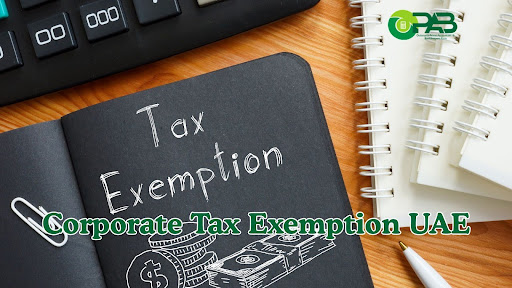
Corporate tax is now a reality for businesses operating in the UAE, but not every company is required to pay it.
Many businesses in the UAE qualify for a corporate tax exemption, either fully or under specific conditions set by law. This has led business owners to ask important questions about who is exempt, what income is covered, and what compliance steps are still required.
Understanding these rules early helps avoid penalties, incorrect filings, and unnecessary tax exposure.
Read on to learn how corporate tax exemption works in the UAE, who qualifies, and what your business needs to do to stay compliant.
What Corporate Tax Exemption Means in the UAE
Corporate tax exemption UAE rules explain which businesses are not required to pay corporate tax and why. These exemptions exist to support public services, social welfare, and specific economic activities defined under UAE law.
An exempt business may still have reporting or declaration obligations. Exemption from paying tax does not always mean exemption from compliance requirements.
Who Is Exempt From Corporate Tax in the UAE
Several entity types are exempt from corporate tax under UAE law. These exemptions are clearly defined and apply only when specific legal and operational conditions are met.
Government and Government-Owned Entities
Federal and Emirate government entities are exempt from corporate tax. Certain entities that are wholly owned and controlled by the government may also qualify if they carry out approved government-related activities.
While these entities do not pay corporate tax, they must still comply with applicable regulatory requirements.
Extractive and Natural Resource Businesses
Businesses engaged in extractive or non-extractive natural resource activities, such as oil, gas, and minerals, are exempt from federal corporate tax. These businesses remain subject to taxation at the Emirate level instead.
The exemption applies only to income generated from natural resource activities.
Public Benefit and Charitable Organizations
Approved qualifying public benefit entities, including charitable organizations, may qualify for a corporate tax exemption in the UAE. To remain exempt, these entities must operate within their approved objectives and meet FTA conditions.
Any commercial activity outside the approved scope may become taxable.
Pension and Social Security Funds
Recognized public and private pension funds and social security funds may be exempt from corporate tax. These exemptions are designed to protect retirement savings and long-term employee benefits.
Ongoing compliance with approval conditions is required.
Other Exempt Persons Under UAE Corporate Tax Law
Other exempt categories may include:
- Qualifying Investment Funds
- Wholly owned and controlled UAE subsidiaries of certain exempt persons
These exemptions apply only if all FTA conditions are met.

Corporate Tax Exemption UAE for Free Zone Companies
Free Zone companies are often assumed to be tax-free; however, this assumption is not always accurate. Corporate tax exemption: UAE rules apply to Free Zone entities only when specific conditions are satisfied.
Free Zone businesses must carefully review their activities, income sources, and compliance status.
Are Free Zone Companies Automatically Exempt
Free Zone companies are not automatically exempt from corporate tax. They must qualify as a Qualifying Free Zone Person to benefit from a 0 percent corporate tax rate on qualifying income.
If the conditions for QFZP status are not met, the standard corporate tax rate may apply.
What Is a Qualifying Free Zone Person
A Qualifying Free Zone Person is a Free Zone entity that meets all regulatory requirements. These include maintaining adequate economic substance, complying with transfer pricing rules, and earning qualifying income as defined by UAE Corporate Tax regulations.
Failure to meet these conditions can result in loss of QFZP status.
What Is Qualifying Income for UAE Corporate Tax
Qualifying income applies to Free Zone Persons under the UAE Corporate Tax rules. It generally includes:
- Income from approved qualifying activities
- Income from transactions that meet regulatory conditions
- Income earned within the Free Zone under approved business categories
Non-qualifying income may be taxed at the standard corporate tax rate, including:
- Certain income from mainland UAE activities
- Income that does not meet the qualifying conditions
Qualifying Free Zone Persons follow different threshold rules than standard taxable persons.
Corporate Tax Waivers and Relief Measures in the UAE
Some businesses search for corporate tax waivers when they are actually referring to exemptions or temporary relief measures. Understanding the distinction helps avoid confusion.
Waivers under UAE Corporate Tax generally relate to penalties and transitional compliance support rather than permanent tax exemption.
Is There a Corporate Tax Waiver in the UAE
The UAE does not offer a permanent corporate tax waiver for all businesses. However, the Federal Tax Authority has introduced penalty relief initiatives to support compliance during the initial implementation phase.
These waivers are linked to meeting specific filing or declaration deadlines.
Transitional Relief and Penalty Reductions
Businesses may qualify for penalty waivers if they submit their corporate tax return or exempt person declaration within seven months from the end of their first tax period or financial year.
Staying informed through official platforms is important.
📚 Also read: EmaraTax Login Guide UAE: How to Access and Fix Login Issues
Basic Exemption Limits and Corporate Tax Thresholds
Corporate tax exemption rules in the UAE include income thresholds that affect how much corporate tax is payable. These thresholds are especially relevant for small and medium-sized businesses and help prevent incorrect tax assumptions.
What Is the Basic Exemption Limit for Corporate Tax in the UAE
The UAE applies a 0 percent corporate tax rate on taxable income up to AED 375,000 for standard taxable persons. Key points to understand:
- The AED 375,000 limit is a tax band, not a full exemption
- Income above AED 375,000 is taxed at the applicable corporate tax rate
- Standard taxable persons benefit from this threshold automatically
- Qualifying Free Zone Persons are treated differently under this limit
What Is the Minimum Threshold for Corporate Tax
Corporate tax registration and compliance are based on tax status and FTA rules, not only on revenue. Important points include:
- Registration depends on whether a person is subject to corporate tax
- Low-income businesses may still be required to register
- Filing obligations can apply even if no tax is payable
- Misunderstanding this threshold is a common compliance issue
Corporate Tax Exemption UAE Criteria Explained
Corporate tax exemption is determined by a combination of legal, operational, and financial factors. These criteria help the FTA determine eligibility and ongoing compliance.
Businesses should review these factors annually.
Legal Structure and Tax Residency
Corporate tax applies to UAE resident juridical persons and certain non-resident persons with a UAE presence. Legal form and tax residency status influence exemption eligibility.
Nature of Business Activity
Some activities are exempt by law, while others are taxable regardless of entity structure. Conducting both exempt and non-exempt activities may require income segregation.
Income Source and Type
Income sourced from the UAE mainland, Free Zones, or outside the UAE may be treated differently. Trading income, service income, and passive income follow distinct corporate tax rules.
📚 Also read: Purpose of Payment Code UAE | Meaning, Use, and Correct Codes
How to Reduce Corporate Tax Legally in the UAE
Reducing corporate tax should focus on lawful planning and full compliance. Early planning helps manage tax exposure without penalties.
Using Exemptions and Reliefs Correctly
To use exemptions and reliefs properly, businesses should:
- Confirm eligibility under current tax rules
- Keep records that support exemption claims
- Review eligibility each tax period
- Get professional guidance to avoid errors
Small Business Relief and Planning
Small businesses may qualify for relief if conditions are met. Key points include:
- Check eligibility before applying relief
- Understand limits and conditions
- Align tax planning with growth plans
📚 Also read: Corporate Tax Training UAE: Registration, Filing, and Compliance

How Much Corporate Tax Will a Limited Company Pay in the UAE
The amount of corporate tax payable depends on income level, exemption status, and business activity. There is no single calculation that applies to all companies.
Example Scenarios
- A small business below the taxable income threshold may pay 0 percent but still file returns
- A Qualifying Free Zone Person may pay 0 percent on qualifying income and standard tax on non-qualifying income
- A mainland company with higher taxable income may pay corporate tax above the threshold
Do Exempt Businesses Still Need to Register for Corporate Tax
Registration requirements depend on the exempt person category. Some exempt persons do not need to register unless they conduct a taxable business, while other exempt persons may be required to register or submit an annual declaration to confirm exemption status.
Failure to follow the correct requirements can result in penalties.
Common Mistakes With Corporate Tax Exemption UAE
Misunderstanding exemption rules often leads to compliance issues.
Common mistakes include:
- Assuming Free Zone status guarantees exemption
- Mixing qualifying and non-qualifying income
- Missing registration or declaration deadlines
- Poor record keeping
Reliable accounting systems reduce these risks.
📚 Also read: Types of Accounting Explained for Beginners and Businesses
How to Check If Your Business Qualifies for Corporate Tax Exemption UAE
Business owners should assess entity type, business activities, income sources, and compliance obligations. A structured review helps confirm exemption eligibility and identify gaps.
A professional review is recommended for complex structures.
Conclusion
Corporate tax exemption in the UAE rules are precise and condition-based. Understanding who qualifies, what income is exempt, and which compliance steps apply helps businesses avoid unnecessary penalties and tax exposure.
If you need expert support for setting up accounting software or ensuring smooth compliance with tax and accounting requirements, consider reaching out to Outsource Prime Accountants and Bookkeepers (OPAB).
OPAB works with businesses across Dubai and the UAE to implement and optimize software like Odoo, Zoho Books, and QuickBooks, ensuring clarity and compliance. Contact OPAB today for tailored guidance that fits your business.
FAQs About Corporate Tax Exemption UAE
Which is exempt from the corporate income tax in the UAE
Government entities, qualifying public benefit entities, pension funds, qualifying investment funds, and certain natural resource businesses may be exempt. Free Zone companies qualify only if regulatory conditions are met.
What is the qualifying income for UAE corporate tax
Qualifying income is income defined under UAE Corporate Tax regulations that meets Free Zone and activity conditions. Non-qualifying income may be taxed at the standard rate.
What is the corporate tax waiver in UAE
The UAE provides penalty relief measures, not permanent tax waivers. These apply when filing or declaration conditions are met within specified timelines.
Do Free Zone companies automatically qualify for corporate tax exemption in the UAE
No, Free Zone companies are not automatically exempt from corporate tax. They must meet specific regulatory conditions, carry out qualifying activities, and earn qualifying income to benefit from preferential treatment.
Are individuals subject to UAE corporate income tax
Individuals are generally not subject to UAE corporate tax unless they conduct a business or commercial activity that falls under corporate tax regulations. In such cases, the tax applies only to the business income, not personal income.