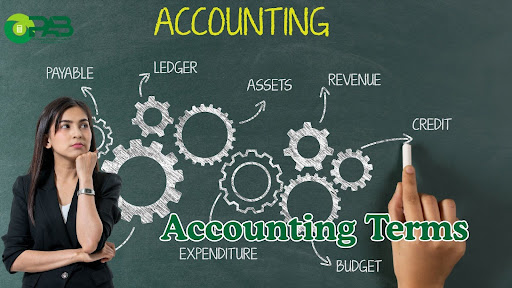
Understanding accounting terms is essential for running a business smoothly in the UAE, especially with VAT and corporate tax requirements now firmly in place. These terms appear in invoices, bank statements, accounting software, and tax filings, making them part of daily business operations.
When business owners understand what these words mean, they can make better decisions, reduce errors, and communicate clearly with accountants and auditors.
If you want to manage your finances with more confidence and stay compliant with UAE regulations, read on to learn the most important accounting terms explained in simple language.
What Are Accounting Terms and Why Do They Matter in the UAE?
Accounting terms are the words and phrases used to record, track, and explain a business’s financial activity. In the UAE, these terms are closely linked to VAT compliance, corporate tax reporting, and financial audits.
Understanding accounting terms helps businesses:
✅ Prepare accurate VAT returns
✅ Comply with UAE corporate tax rules
✅Maintain proper financial records for audits
✅Communicate clearly with accountants and tax consultants
What Is Accounting in Simple Words?
Accounting is the process of recording, organizing, and reviewing a business’s financial transactions to understand income, expenses, and taxes.
In the UAE, accounting also helps businesses meet VAT requirements, corporate tax obligations, and financial reporting standards set by regulators.
Basic Accounting Terms Every UAE Business Owner Should Know
These accounting terms form the foundation of all financial records. Learning them makes it easier to understand reports, tax filings, and overall business performance.
Assets
Assets are things a business owns that have value. Common UAE examples include:
✅Cash in business bank accounts
✅Inventory or stock
✅Office equipment and vehicles
✅ Trade receivables from customers
Liabilities
Liabilities are amounts a business owes to others. These commonly include:
✅ Supplier payables
✅ VAT payable to the Federal Tax Authority
✅Bank loans
✅ Accrued expenses
Equity
Equity is the owner’s share in the business after liabilities are deducted from assets. In UAE companies, this usually includes:
✅ Paid up capital
✅ Retained earnings
✅ Owner contributions
Revenue
Revenue is the income earned from selling goods or services. In the UAE, revenue may be:
✅Standard rated for VAT at 5 percent
✅Zero rated at 0 percent
✅ Exempt from VAT depending on the type of supply
Expenses
Expenses are the costs incurred to operate a business. Examples include:
✅ Rent and utilities
✅ Salaries and employee benefits
✅ Software subscriptions
✅ Marketing and professional fees
Some expenses are deductible for corporate tax purposes, while others may not be allowed under UAE corporate tax rules.
The 5 Basic Accounting Accounts Used in the UAE
Accounting systems classify transactions into five main account types. These accounts appear in all UAE financial statements and accounting software.
✅Assets
✅ Liabilities
✅ Equity
✅ Revenue
✅ Expenses
Every transaction affects at least two of these accounts, which helps ensure accuracy and proper tax treatment when using tools like Odoo, Zoho Books, or QuickBooks.
📚 Also read: Types of Accounting Explained for Beginners and Businesses
The 10 Accounting Concepts Explained for UAE Businesses
Accounting concepts are principles that guide how financial records are prepared. In the UAE, these concepts align with International Financial Reporting Standards.
✅ Business Entity Concept
The business is treated separately from its owner, meaning personal expenses should not be recorded as company expenses.
✅ Money Measurement Concept
Only transactions that can be measured in money are recorded, usually in AED.
✅ Going Concern Concept
The business is assumed to continue operating in the foreseeable future.
✅ Cost Concept
Assets are recorded at their original purchase cost.
✅Dual Aspect Concept
Every transaction affects two accounts, such as cash and expenses.
✅ Accounting Period Concept
Financial results are reported for specific periods, such as monthly or yearly.
✅ Matching Concept
Expenses are recorded in the same period as the revenue they generate.
✅ Revenue Recognition Concept
Revenue is recorded when it is earned, not when payment is received.
✅Consistency Concept
Accounting methods should be applied consistently from one period to another.
✅ Prudence Concept
Expenses and losses are recorded cautiously, while income is recognized carefully.
The 4 Fundamentals of Accounting in Practice
Accounting follows four basic steps that keep financial records reliable and meaningful. These steps apply to UAE businesses of all sizes.
✅ Recording transactions as they occur
✅ Classifying transactions into the correct accounts
✅ Summarizing financial data into reports
✅ Interpreting results for decision making and compliance
The Three Golden Rules of Accounting
The golden rules guide how debit and credit entries are recorded. They are especially useful when preparing journal entries.
✅ Debit the receiver and credit the giver for personal accounts
✅ Debit what comes in and credit what goes out for real accounts
✅ Debit expenses and losses and credit income and gains for nominal accounts
For example, when a UAE business pays office rent, the rent expense is debited and the bank account is credited.
VAT Accounting Terms Every UAE Business Must Understand
VAT related accounting terms are critical for businesses registered with the Federal Tax Authority. Using these terms correctly helps prevent penalties and filing errors.
Input VAT
Input VAT is the VAT paid on business purchases and expenses. It may be recoverable if the expense is used for taxable business activities and meets Federal Tax Authority conditions.
Output VAT
Output VAT is the VAT charged on sales to customers. This amount must be reported in VAT returns and paid to the Federal Tax Authority.
Tax Invoice
A tax invoice is an official document showing VAT charged on a sale. UAE tax invoices must include required details such as the supplier’s TRN, invoice date, and VAT amount.
TRN
The Tax Registration Number is issued after VAT registration and must appear on tax invoices and VAT filings.
Corporate Tax Accounting Terms in the UAE
Corporate tax introduced additional accounting responsibilities for UAE businesses. Understanding these terms helps ensure accurate tax calculations and reporting.
✅ Taxable Income
Taxable income is based on accounting profit, adjusted according to UAE corporate tax law.
✅ Allowable Deductions
Allowable deductions are expenses that may be deducted when calculating taxable income, subject to corporate tax rules and guidance.
✅ Exempt Income
Certain income may be exempt from corporate tax, depending on the business structure and activity.
✅ Related Party Transactions
Transactions between connected parties must follow transfer pricing rules and the arm’s length principle.

Financial Statement Accounting Terms Used in the UAE
Financial statements summarize a company’s financial position and performance. For UAE corporate tax purposes, financial statements are prepared using IFRS or IFRS for SMEs for eligible businesses.
Balance Sheet
The balance sheet shows assets, liabilities, and equity at a specific point in time.
Income Statement
The income statement shows revenue, expenses, and net profit for a reporting period.
Cash Flow Statement
The cash flow statement tracks how cash moves in and out of the business.
Accounting Terms vs Bookkeeping Terms
Accounting and bookkeeping use many of the same terms but serve different purposes. Bookkeeping focuses on recording transactions, while accounting focuses on analysis, reporting, and compliance.
📚 Also read: Bookkeeping vs. Accounting UAE: Which Service Do You Need?
How Accounting Terms Connect to Accounting Services in the UAE
Understanding accounting terms helps business owners identify which services they need and when professional support becomes important.
Accounting Software Terms You May Encounter
Many UAE businesses use cloud accounting software, which introduces additional terms related to automation and reporting.
Common examples include:
✅Chart of accounts
✅ Bank reconciliation
✅ Financial dashboards
✅ Automated reporting
📚 Also read: Xero Accounting for UAE Businesses: VAT & Compliance Ready
Conclusion
Accounting terms are the language of business finance, and understanding them is essential for operating successfully in the UAE. From basic concepts like assets and expenses to VAT and corporate tax terminology, these terms help businesses stay organized and compliant.
If you need expert support for setting up accounting software or ensuring smooth compliance with tax and accounting requirements, consider reaching out to Outsource Prime Accountants and Bookkeepers (OPAB).
OPAB works with businesses across Dubai and the UAE to implement and optimize software like Odoo, Zoho Books, and QuickBooks, ensuring clarity and compliance.
Contact OPAB today for tailored guidance that fits your business.
FAQs About Accounting Terms
What are accounting terms in simple words?
Accounting terms are words used to record and explain how money moves in and out of a business.
Are accounting terms different in the UAE?
Most accounting terms are global, but the UAE applies them within VAT and corporate tax rules.
Why are accounting terms important for small businesses?
They help business owners understand finances, stay compliant, and avoid costly mistakes.
How do accounting terms help with VAT return filing in the UAE?
They help businesses record sales, expenses, input VAT, and output VAT correctly, making VAT returns more accurate and reducing the risk of FTA errors or penalties.
Do small businesses in the UAE need to understand accounting terms even if they use an accountant?
Yes, basic knowledge helps business owners review reports, communicate clearly with accountants, and stay aware of VAT and corporate tax obligations.