UAE TAX COMPLIANCE GUIDE | NOVEMBER 2026
Introduction
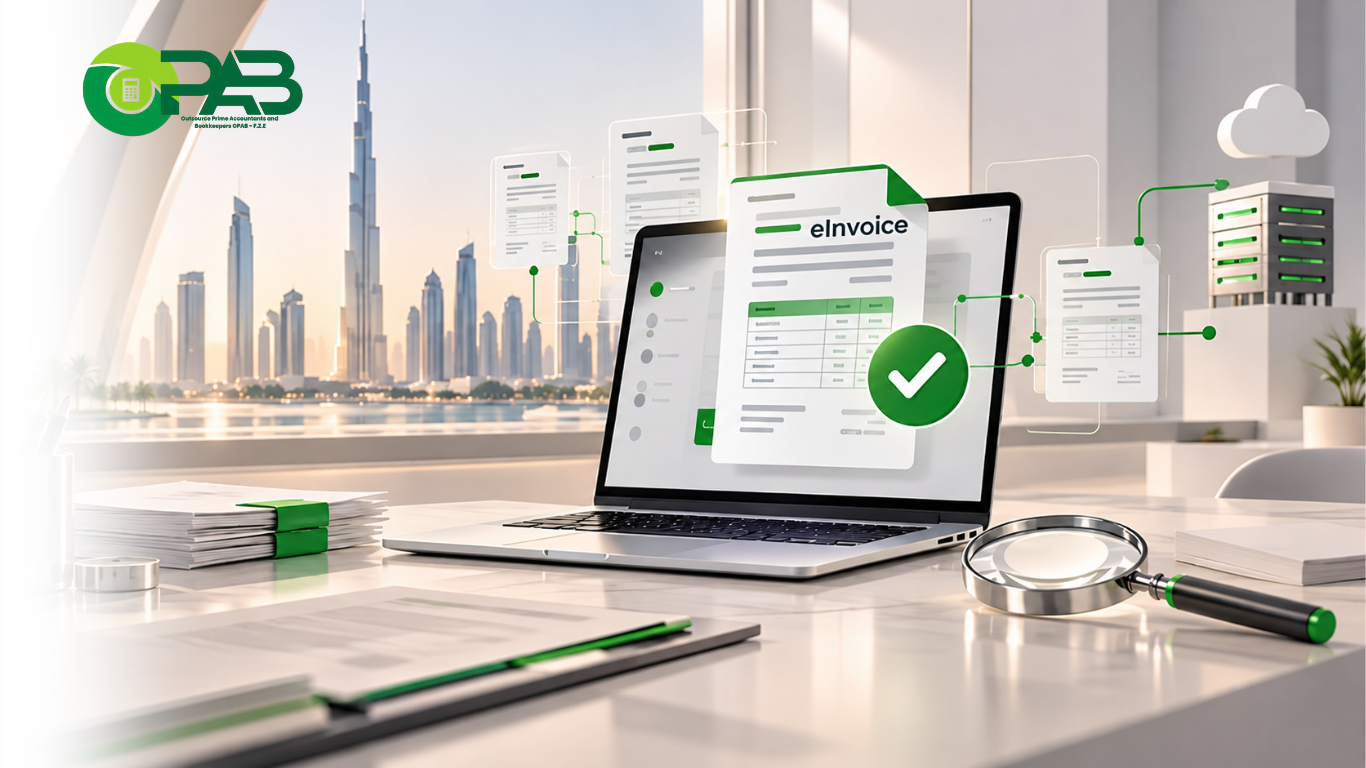
The UAE is entering a new phase of digital tax compliance with the introduction of mandatory electronic invoicing. For small and medium-sized enterprises (SMEs), this means preparing for changes in how invoices are created, exchanged, received, and recorded.
Unlike traditional PDF invoices sent by email, e-invoicing involves structured electronic invoice data exchanged through Accredited Service Providers (ASPs). This enables more efficient invoice processing and reporting of relevant tax information to the Federal Tax Authority (FTA).
For businesses using accounting software such as Zoho Books, Xero, QuickBooks, or Odoo, early preparation is essential to ensure a smooth transition and avoid last-minute compliance challenges.
1. Important UAE e-invoicing deadlines
The UAE Ministry of Finance has established a phased implementation schedule based on business revenue.
Business category | ASP appointment deadline | Mandatory implementation |
|---|---|---|
Revenue of AED 50 million or more | 30 October 2026 | 1 January 2027 |
Revenue below AED 50 million | 31 March 2027 | 1 July 2027 |
Government entities | 31 March 2027 | 1 October 2027 |
For most SMEs, the key dates are 31 March 2027, to appoint an ASP, and 1 July 2027, to begin mandatory e-invoicing.
Businesses should confirm their implementation phase using the applicable revenue definition and official Ministry of Finance guidance.
2. How UAE e-invoicing works
The UAE is adopting a decentralized five-corner e-invoicing model based on the Peppol framework.
The process generally involves five participants:
Supplier: Creates an electronic invoice using its accounting or invoicing system.
Supplier’s ASP: Validates and transmits the structured invoice.
Buyer’s ASP: Receives the electronic invoice from the supplier’s ASP.
Buyer: Receives the invoice for accounting and payment processing.
Federal Tax Authority: Receives the required tax data through the reporting framework.
Businesses will generally continue creating invoices through their accounting systems, provided those systems are properly integrated with the selected ASP.
Simply generating a PDF invoice or emailing it to a customer will not, by itself, satisfy the new structured e-invoicing requirements.
3. Practical e-invoicing readiness checklist for SMEs
SME readiness checklist
0 of 21 completed
1. Review business applicability
2. Assess existing accounting software
3. Clean up accounting and customer records
4. Select an Accredited Service Provider
5. Test and implement e-invoicing
4. Common mistakes SMEs should avoid
Assuming PDF invoices are sufficient. E-invoicing requires structured electronic data exchanged through the prescribed framework, rather than merely sending digital copies of invoices.
Waiting until July 2027 to prepare. SMEs should appoint their ASP by 31 March 2027, leaving sufficient time for onboarding, system integration and testing.
Assuming accounting software is automatically compliant. Businesses must verify whether their existing software can integrate with an ASP and support the required UAE invoice formats.
Ignoring supplier invoices. E-invoicing affects receiving and processing relevant purchase invoices, not only issuing sales invoices.
Assuming free-zone companies are automatically exempt. Businesses operating in UAE free zones should assess their obligations under the applicable e-invoicing rules.
5. Recommended SME preparation timeline
Period | Recommended action |
|---|---|
November–December 2026 | Review applicability, invoice processes and accounting records |
January–February 2027 | Evaluate ASPs and confirm software integration requirements |
March 2027 | Finalize ASP appointment by 31 March |
April–May 2027 | Complete onboarding, integration and transaction testing |
June 2027 | Conduct final system checks and staff training |
1 July 2027 | Mandatory implementation for in-scope SMEs |
This is a suggested internal preparation timeline. Businesses should refer to official announcements for statutory deadlines and any subsequent amendments.
6. How OPAB can help SMEs prepare
Outsource Prime Accountants & Bookkeepers (OPAB) supports UAE businesses in preparing their accounting systems and financial records for changing tax compliance requirements.
Our e-invoicing readiness support can include:
Reviewing existing accounting and invoicing processes.
Assessing customer, supplier and invoice data quality.
Identifying accounting software integration requirements.
Coordinating with the business’s selected ASP.
Supporting invoice testing, reconciliations and internal accounting procedures.
Providing ongoing bookkeeping, VAT and corporate tax compliance support.
The objective is to help SMEs transition to electronic invoicing while maintaining accurate accounting records and efficient financial operations.
7. Final thoughts
UAE e-invoicing represents a significant change in how businesses manage invoices and tax information. While mandatory implementation for most SMEs is scheduled for 1 July 2027, preparation should begin well in advance.
Businesses that review their accounting systems, organize their financial records and appoint an appropriate ASP early will be better positioned to meet their obligations without unnecessary operational disruption.
The key to e-invoicing readiness is simple: start early, maintain accurate records, and ensure your accounting system is prepared for integration.
Get Ready for UAE E-Invoicing with OPAB
Is your business ready for the UAE’s 2027 e-invoicing requirements?
Contact OPAB today to book your FREE consultation!