Introduction
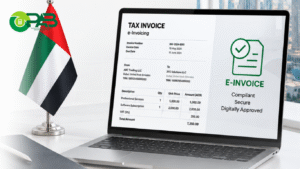
The United Arab Emirates is entering a new era of digital tax compliance with the introduction of mandatory UAE e-invoicing in 2027. This change will affect how businesses create, issue, receive, and manage invoices through their accounting systems.
For companies using Zoho Books, Xero, QuickBooks, Odoo, or other accounting software, preparing for UAE e-invoicing compliance involves more than simply upgrading software. Businesses must review their financial records, verify customer information, assess system compatibility, and establish connections with an Accredited Service Provider (ASP).
Whether you operate a mainland company, free zone business, or small and medium-sized enterprise (SME), early preparation can help prevent invoice processing errors, operational disruptions, and compliance risks.
This guide explains how to prepare your accounting software for UAE e-invoicing compliance, the important implementation deadlines, and the practical steps businesses should take before 2027.
1. What Is UAE E-Invoicing?
UAE e-invoicing is a government-regulated system that enables businesses to issue, exchange, and report invoices electronically using structured digital data.
Unlike traditional invoicing, which often involves emailing PDF invoices to customers, the new system uses a standardized electronic format that accounting and invoicing platforms can process automatically.
Under the UAE framework, an e-invoice must be exchanged through the approved electronic invoicing infrastructure.
Important: A PDF invoice, scanned document, Microsoft Word invoice, or invoice sent by email does not automatically qualify as a compliant UAE e-invoice.
How does UAE e-invoicing work?
The UAE adopts a decentralized five-corner model based on the Peppol framework.
In simple terms, your accounting software prepares the invoice data, an accredited provider validates and exchanges it with the buyer’s provider, and the required tax data is reported to the government.
2. UAE E-Invoicing Implementation Deadlines for 2027
The UAE Ministry of Finance has established a phased implementation schedule based on business revenue.
| Business category | Deadline to appoint ASP | Mandatory implementation |
|---|---|---|
| Annual revenue of AED 50 million or more | 30 October 2026 | 1 January 2027 |
| Annual revenue below AED 50 million | 31 March 2027 | 1 July 2027 |
| In-scope government entities | 31 March 2027 | 1 October 2027 |
The deadline for larger businesses was extended from 31 July to 30 October 2026, while the mandatory go-live date remains unchanged.
The initial mandatory scope generally covers business-to-business (B2B) and business-to-government (B2G) transactions, subject to applicable exclusions. Business-to-consumer (B2C) transactions are not included in the initial mandatory rollout.
For SMEs: Businesses earning less than AED 50 million annually should begin reviewing their accounting systems now rather than waiting until July 2027.
3. Review Your Existing Accounting Software
The first step toward UAE e-invoicing readiness is evaluating whether your current accounting software can support the required electronic invoicing processes.
Popular accounting platforms used by UAE businesses include:
Zoho Books
Review UAE organization settings, VAT configurations, customer master data, and the vendor’s e-invoicing integration capabilities.
Xero
Check the organization’s regional setup, invoice fields, tax rates, and supported UAE e-invoicing integrations.
QuickBooks Online
Verify UAE VAT settings, invoice customization, and compatibility with a suitable accredited provider.
Odoo
Evaluate localization modules, invoicing workflows, structured data export, and integration requirements.
Using one of these accounting platforms does not automatically guarantee UAE e-invoicing compliance. Businesses must confirm the availability and suitability of the required integration.
Key questions to ask your software provider
- Does the software support the UAE PINT AE electronic invoice standard?
- Can it integrate with a UAE Accredited Service Provider?
- Does it support electronic credit notes and invoice validation?
- Can it track accepted, rejected, and failed e-invoice transmissions?
- Will additional subscription fees, modules, or integrations be required?
4. Clean Up Your Customer and Supplier Records
One of the most important preparation steps is ensuring that customer and supplier information is complete and accurate.
Incomplete records may lead to validation failures or unsuccessful electronic invoice delivery.
Review the following information in your accounting software:
| Information | Required preparation |
|---|---|
| Customer legal name | Verify against business records |
| Customer address | Ensure accurate and complete details |
| Tax Registration Number | Verify where applicable |
| Electronic invoicing address | Obtain and configure the appropriate endpoint |
| Supplier information | Update legal and tax details |
| Invoice currency | Confirm correct currency codes |
| VAT treatment | Review taxable, zero-rated, exempt, and out-of-scope classifications |
Not every field applies identically to every transaction. The applicable UAE e-invoice data requirements should be checked against the official data dictionary.
5. Review Your VAT Settings and Tax Codes
Incorrect VAT configurations can create significant problems when invoices are processed electronically.
Businesses should review their existing VAT settings to ensure that transactions are classified correctly.
Common UAE VAT classifications include:
Standard-rated supplies at 5%.
Zero-rated supplies at 0%.
VAT-exempt supplies.
Out-of-scope transactions.
Reverse charge transactions, where applicable.
For example, a UAE consulting company providing services to overseas customers should not automatically classify every international invoice as zero-rated. The VAT treatment depends on the nature of the supply and applicable UAE VAT rules.
Your accounting system should be configured to reflect the correct treatment before issuing e-invoices.
6. Select a UAE Accredited Service Provider (ASP)
An Accredited Service Provider is a technology provider authorized under the UAE e-invoicing framework to facilitate the exchange and reporting of electronic invoices.
Businesses generally need to appoint an ASP to participate in the mandatory e-invoicing system.
When selecting a provider, consider software compatibility, implementation cost, transaction volume, technical support, data security, and the ability to manage invoice errors.
The Ministry of Finance updated the provider accreditation framework through Ministerial Decision No. 168 of 2026. Businesses should verify a provider’s current accreditation rather than relying on an earlier preliminary approval.
You can review the official list here:
UAE Ministry of Finance – Accredited Service Providers
7. Test Your E-Invoicing Integration Before Going Live
Once your accounting software and accredited provider are connected, conduct a complete testing process.
Testing should cover normal invoices, electronic credit notes, VAT calculations, different currencies, and the correction of rejected invoices.
For example, a UAE company using Zoho Books could create a sample B2B invoice and verify whether the required data can be transmitted to its accredited provider, validated, exchanged with the buyer’s provider, and successfully reported.
Businesses should also establish a process for resolving errors without creating duplicate invoices or incorrect accounting entries.
8. Train Your Accounting and Finance Team
UAE e-invoicing is not solely an IT implementation project. It also changes the responsibilities of accounting, finance, and administrative personnel.
Employees responsible for invoicing should understand how to create compliant invoices, review customer details, monitor transmission statuses, issue credit notes, and resolve rejected documents.
Businesses should also establish internal controls to ensure that electronic invoices reconcile with their sales ledger and VAT records.
9. Maintain Proper Accounting Records and Reconciliation
E-invoicing improves transaction visibility, but businesses remain responsible for maintaining accurate accounting records.
A compliant electronic invoice does not automatically mean the underlying accounting transaction has been recorded correctly.
Businesses should continue performing regular reconciliations between:
Sales invoices and the general ledger.
Customer receivables and collections.
Electronic credit notes and accounting adjustments.
VAT reports and underlying transactions.
Electronic invoice transmission records and accounting records.
These controls are essential for reliable financial statements, VAT reporting, and UAE Corporate Tax compliance.
10. UAE E-Invoicing Readiness Checklist for Businesses
Use this checklist to assess your organization’s preparation progress.
11. Common Mistakes Businesses Should Avoid
Businesses preparing for UAE e-invoicing should avoid several common mistakes.
Waiting until the implementation deadline. Software integration, provider onboarding, and testing may require substantial preparation time.
Assuming PDF invoices are compliant. A traditional PDF does not satisfy the structured electronic invoice requirements.
Ignoring customer information errors. Incorrect legal names, tax details, or electronic addresses can interrupt invoice processing.
Failing to review VAT configurations. Incorrect tax classifications can affect both electronic invoices and VAT returns.
Assuming existing software is automatically compliant. Businesses should obtain confirmation from their software vendor and selected ASP.
12. Frequently Asked Questions About UAE E-Invoicing
Is UAE e-invoicing mandatory for small businesses?
Yes. In-scope businesses with annual revenue below AED 50 million are scheduled to implement e-invoicing from 1 July 2027 and must appoint an ASP by 31 March 2027.
Do free zone companies need to comply with UAE e-invoicing?
Free zone status alone does not provide a general exemption. Companies conducting in-scope business transactions should assess their obligations under the UAE e-invoicing framework.
Can I continue using Zoho Books, Xero, or QuickBooks?
Potentially, yes. Businesses may be able to continue using their existing accounting software if it supports a suitable compliant integration. The actual capabilities and implementation arrangements must be verified with the software vendor and ASP.
Do businesses need to upload all their previous invoices?
The phased mandatory implementation generally concerns transactions falling within the applicable e-invoicing obligations from the relevant implementation date. Businesses should retain earlier invoices and records in accordance with applicable recordkeeping rules. There is no general requirement to retrospectively convert every historical invoice into an e-invoice solely because the new system begins.
Is UAE e-invoicing the same as VAT registration?
No. VAT registration and e-invoicing are separate compliance obligations. A business should assess its e-invoicing obligations independently of its VAT registration status.
Will UAE e-invoicing replace accountants and bookkeepers?
No. Although e-invoicing can automate invoice exchange and reporting, accountants remain essential for accurate transaction classification, reconciliation, financial reporting, tax compliance, and internal controls.
13. How OPAB Can Help Your Business Prepare for UAE E-Invoicing
At OPAB – Outsource Prime Accountants & Bookkeepers, we help UAE businesses strengthen their accounting systems, improve financial reporting, and prepare for evolving tax compliance requirements.
Our services include accounting software setup and review, bookkeeping cleanup, VAT configuration assessments, customer and supplier data review, financial reconciliation, and e-invoicing readiness support.
Whether your business uses Zoho Books, Xero, QuickBooks, or another accounting platform, proper preparation can help create a smoother transition to the new UAE e-invoicing requirements.
Prepare Your Business for UAE E-Invoicing with OPAB
Avoid last-minute compliance challenges. Get professional guidance on reviewing your accounting software, organizing financial records, and preparing your invoicing processes for the UAE’s digital transformation.
Contact OPAB to kook your FREE consultation today.
OPAB – Outsource Prime Accountants & Bookkeepers