Intrduction
The UAE is entering a new era of digital tax compliance with the implementation of its Electronic Invoicing System (eInvoicing). With mandatory adoption beginning in January 2027, businesses must evaluate their accounting systems, financial processes, and overall compliance readiness.
For business owners, CFOs, and finance professionals, UAE e-invoicing system readiness is no longer just an IT concern. It is an important financial and operational priority.
What Is UAE E-Invoicing?
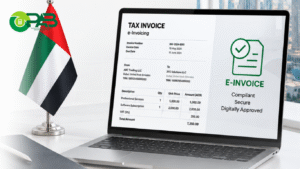
UAE e-invoicing is a government initiative requiring businesses to issue, exchange, and process structured electronic invoices through an approved digital framework.
Unlike traditional PDF or Excel invoices, compliant e-invoices contain structured data that can be processed automatically and reported electronically to the Federal Tax Authority (FTA).
The system uses Accredited Service Providers (ASPs) and the international Peppol standard to facilitate secure invoice exchange.
Important: Sending PDF invoices by email does not automatically meet UAE e-invoicing requirements.
UAE E-Invoicing Implementation Deadlines
The UAE Ministry of Finance has established a phased implementation schedule.
| Business category | ASP appointment deadline | Mandatory implementation |
|---|---|---|
| Annual revenue of AED 50 million or more | 30 October 2026 | 1 January 2027 |
| Annual revenue below AED 50 million | 31 March 2027 | 1 July 2027 |
| Government entities within scope | 31 March 2027 | 1 October 2027 |
Businesses should prepare ahead of these deadlines to allow sufficient time for system integration, provider selection, and employee training.
UAE E-Invoicing Readiness Checklist: 7 Essential Steps
1. Assess Your Current Accounting System
Evaluate whether your existing accounting software, such as Zoho Books, QuickBooks, Xero, SAP, or Oracle, can support the UAE’s structured electronic invoicing requirements.
Key question: Can your accounting system integrate with an Accredited Service Provider?
Software compatibility should be confirmed with the vendor and selected provider rather than assumed.
2. Select an Accredited Service Provider
Businesses must identify an appropriate ASP to facilitate electronic invoice exchange.
When evaluating providers, consider:
Official accreditation status
Accounting software compatibility
Data security and reliability
Implementation and integration costs
Technical support and ongoing maintenance
3. Review Customer and Supplier Information
Accurate master data is essential for successful electronic invoicing.
Review customer and supplier records, including business names, addresses, tax registration details, and required invoice information.
Incomplete or incorrect information may result in invoice validation errors.
4. Strengthen VAT and Invoice Compliance
Review your existing tax invoices, credit notes, VAT treatment, and accounting records.
Ensure that financial information is accurate and consistent with applicable UAE VAT requirements.
5. Train Your Finance Team
Finance and accounting employees should understand how to create, receive, validate, and reconcile electronic invoices.
Clear responsibilities and documented procedures will help reduce operational errors.
6. Conduct System Integration Testing
Test electronic invoice generation, transmission, receipt, reporting, and exception handling before implementation.
Businesses should coordinate testing with their software vendors and Accredited Service Providers.
7. Establish an Implementation Plan
Assign responsibilities, determine the project budget, and establish clear milestones.
Finance, IT, operations, and management should work together to ensure a smooth transition.
Latest UAE E-Invoicing Regulatory Updates
In October 2026, the Ministry of Finance announced regulatory amendments designed to simplify implementation and reduce administrative burdens.
These include:
A temporary 24-month exclusion for transactions between members of the same tax group, beginning 1 January 2027.
Removal of the previous requirement to store electronic invoice records within the UAE, while maintaining applicable retention and accessibility obligations.
Removal of the earlier two-business-day FTA notification requirement for system failures.
Businesses should continue monitoring official announcements as implementation progresses.
Why E-Invoicing Readiness Matters
Failure to prepare may expose businesses to compliance risks, invoice processing delays, additional costs, and operational disruptions.
However, successful implementation can provide significant business benefits:
Improved efficiency: Reduced manual invoice processing and data entry.
Better accuracy: Fewer invoicing errors and reconciliation issues.
Stronger financial controls: Greater transaction transparency and traceability.
Improved cash flow management: More efficient invoicing and receivables monitoring.
Regulatory compliance: Better alignment with UAE electronic invoicing requirements.
From a CFO’s perspective, e-invoicing should be treated as an opportunity to modernize financial operations, not merely another regulatory obligation.
Frequently Asked Questions
Is UAE e-invoicing mandatory in 2027?
Yes. Mandatory implementation begins in phases from January 2027 for businesses and transactions within the applicable scope.
Can businesses continue using Zoho Books or QuickBooks?
Potentially, yes. Businesses should verify whether their existing software can integrate with an Accredited Service Provider and meet the UAE’s technical requirements.
Are small businesses required to comply?
Small businesses conducting in-scope transactions may be required to comply. The mandatory implementation date for businesses with annual revenue below AED 50 million is 1 July 2027.
Does e-invoicing replace VAT return filing?
No. Businesses must continue fulfilling their applicable UAE VAT reporting and filing obligations.
Conclusion: Start Your UAE E-Invoicing Readiness Assessment Today
The introduction of UAE e-invoicing represents a significant transformation in financial reporting, tax compliance, and business operations.
Early preparation will help businesses minimize compliance risks, improve financial processes, and avoid last-minute implementation challenges.
The key to successful UAE e-invoicing implementation is preparation, system readiness, and effective financial management.
Need Help Preparing for UAE E-Invoicing? Contact OPAB
Is your accounting system ready for UAE e-invoicing?
At OPAB, we understand the challenges businesses face in adapting to new accounting technologies and regulatory requirements.
Our accounting and financial advisory support can help businesses assess existing financial processes, improve accounting records, strengthen compliance controls, and prepare for digital invoicing.
Whether your business uses Zoho Books, QuickBooks, Xero, or another accounting platform, understanding your system’s readiness is an important first step.
Contact OPAB today to discuss your UAE E-Invoicing System Readiness.
OPAB – Your Partner in Accounting, Compliance & Business Growth.