Introduction: UAE E-Invoicing Is Transforming Business Compliance
The United Arab Emirates is introducing the UAE Electronic Invoicing System (eInvoicing) as part of its digital transformation and tax compliance initiatives.
With mandatory implementation beginning in January 2027, businesses must understand the requirements and prepare their accounting systems, financial processes, and employees.
UAE e-invoicing is more than a regulatory requirement. It is an opportunity to improve efficiency, transparency, and financial control.
What Is UAE E-Invoicing?
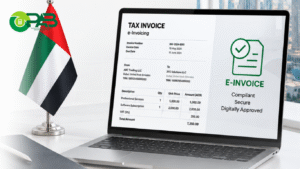
UAE e-invoicing is a digital system that enables businesses to create, exchange, and process invoices electronically using standardized, structured data.
Unlike traditional PDF, Excel, or paper invoices, compliant electronic invoices can be processed automatically through compatible systems.
The UAE framework uses Accredited Service Providers (ASPs) to facilitate invoice exchange and reporting of relevant tax data to the Federal Tax Authority (FTA).
Important: Sending a PDF invoice by email does not automatically meet UAE e-invoicing requirements.
UAE E-Invoicing Implementation Timeline
The UAE Ministry of Finance has introduced a phased implementation schedule.
| Business category | ASP appointment deadline | Mandatory implementation |
|---|---|---|
| Annual revenue of AED 50 million or more | 30 October 2026 | 1 January 2027 |
| Annual revenue below AED 50 million | 31 March 2027 | 1 July 2027 |
| Government entities within scope | 31 March 2027 | 1 October 2027 |
Businesses should begin preparing before their mandatory deadlines to avoid technical and operational challenges.
Which Businesses Must Comply?
The UAE e-invoicing framework generally applies to in-scope:
Business-to-business (B2B) transactions
Business-to-government (B2G) transactions
Businesses operating across trading, services, manufacturing, construction, and other industries
Business-to-consumer (B2C) transactions are excluded from the initial mandatory framework. Other specific exclusions may also apply.
Businesses should review their activities and transaction types to determine their obligations.
How Does UAE E-Invoicing Work?
The UAE Electronic Invoicing System uses a decentralized model based on the international Peppol standard.
The process generally involves:
Invoice creation: The supplier generates a structured electronic invoice.
Invoice transmission: An Accredited Service Provider processes the invoice.
Electronic exchange: The invoice is transmitted to the buyer’s service provider.
Invoice receipt: The buyer receives the invoice electronically.
Tax reporting: Relevant invoice information is reported to the FTA.
This process aims to reduce manual work, improve invoice accuracy, and strengthen tax transparency.
Important UAE E-Invoicing Updates in 2026
Recent regulatory developments have introduced additional clarifications.
Key changes under Ministerial Decision No. 197 of 2026 include:
Tax-group transactions: Temporary exclusion of transactions between members of the same tax group for 24 months from 1 January 2027.
Record retention: Removal of the previous requirement to store electronic invoice records within the UAE, while applicable retention and accessibility obligations remain.
System failures: Removal of the earlier requirement to notify the FTA of system failures within two business days.
Businesses should monitor official announcements to stay informed about regulatory changes.
How Can Businesses Prepare for UAE E-Invoicing?
Early preparation is essential for a smooth transition.
1. Review Existing Accounting Systems
Assess whether your accounting or ERP software can generate structured electronic invoices and integrate with an Accredited Service Provider.
2. Select an Accredited Service Provider
Evaluate providers based on accreditation, software compatibility, data security, implementation support, and cost.
3. Improve Invoice Data Accuracy
Review customer information, supplier details, tax registration numbers, and invoice formats to minimize errors.
4. Train Finance Teams
Ensure accounting, finance, and tax personnel understand the new invoicing requirements and workflows.
5. Conduct System Testing
Test invoice generation, transmission, receipt, and reporting before mandatory implementation.
What Are the Risks of Non-Compliance?
Businesses that fail to comply with applicable UAE e-invoicing requirements may face:
Administrative penalties under relevant legislation
Invoice processing delays
Business transaction disruptions
Additional accounting and compliance costs
Weaknesses in financial reporting and internal controls
Preparing early can help businesses reduce these risks and maintain operational continuity.
Why UAE E-Invoicing Matters to Business Owners and CFOs
E-invoicing is not simply a technology upgrade. It directly affects financial management and business operations.
For CFOs and finance managers, it offers opportunities to improve financial reporting, strengthen internal controls, and automate invoice processing.
For business owners, it supports more efficient operations, better transaction visibility, and improved compliance.
Businesses should treat e-invoicing as a finance transformation initiative rather than solely an IT project.
Frequently Asked Questions
1. Is e-invoicing mandatory in the UAE?
Yes. Mandatory implementation begins in phases from 1 January 2027 for businesses and transactions within scope.
2. Is a PDF invoice considered an e-invoice?
No. Compliant electronic invoices require structured data exchanged through the prescribed electronic invoicing system.
3. Do small businesses need to comply?
Yes, where their transactions fall within scope. Businesses with annual revenue below AED 50 million have a mandatory implementation date of 1 July 2027.
4. Does e-invoicing replace VAT returns?
No. Businesses must continue fulfilling their applicable UAE VAT filing and reporting obligations.
Conclusion: Start Preparing for UAE E-Invoicing Today
The introduction of UAE e-invoicing represents a major step toward digital tax compliance and modern financial management.
Businesses should review their accounting systems, understand the requirements, engage suitable service providers, and train their finance teams ahead of implementation.
Early preparation is the key to minimizing compliance risks, improving operational efficiency, and ensuring a smooth transition to UAE e-invoicing.
Contact OPAB today to discuss your UAE e-invoicing readiness and take the next step toward efficient, compliant financial operations.
Official References